Trigger Point Dry Needling
Release Tension. Move Freely. Recover With Precision.
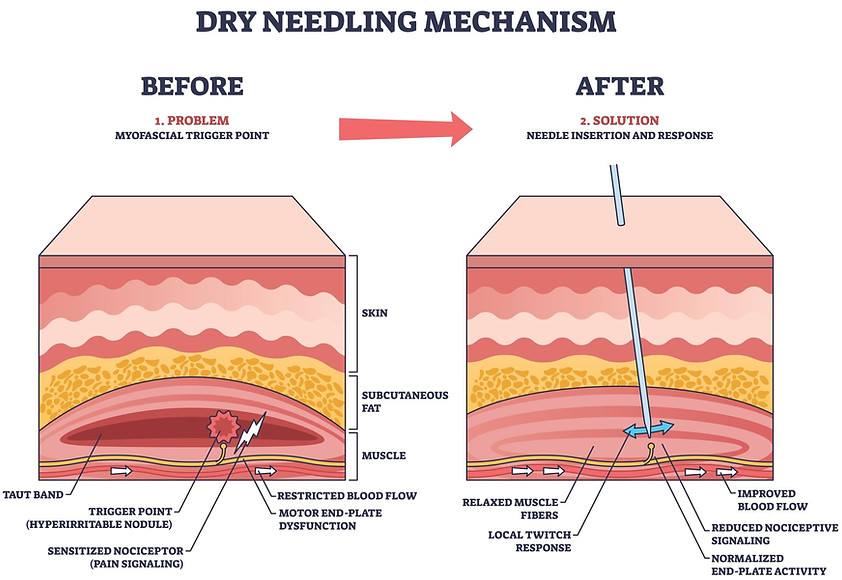
Dry needling at TRIDENT is a precise soft tissue treatment used to reduce myofascial pain, release trigger points, improve mobility, and support neuromuscular recovery. This service is especially valuable for individuals dealing with chronic muscular tightness, tension-based pain, movement restriction, overuse injuries, or performance-limiting dysfunction. Often integrated with rehabilitation and corrective movement strategies, dry needling helps create the conditions for better movement and more effective recovery. For patients seeking a refined, clinically grounded treatment that complements a broader recovery plan, dry needling offers a focused and efficient path toward improved function.
Click The Picture To Read More About This Procedure
What it does:
Dry needling uses a thin filiform needle, without medication or injectate, to target myofascial trigger points, tight muscles, fascia, and selected neuromusculoskeletal tissues. It is commonly used to reduce pain, improve mobility, decrease muscle tension, and support movement restoration. Recent reviews suggest it may help selected patients with musculoskeletal pain, especially as part of a broader rehabilitation program rather than as a stand-alone cure.
Good candidates:
Good candidates include patients with myofascial pain, chronic tightness, movement restriction, low back pain, tension-related pain patterns, or muscular dysfunction that is limiting performance or recovery. It is often best suited for people already engaged in physical therapy, corrective exercise, or active rehabilitation.
Why it may be a good choice:
Dry needling may be a good option because it is minimally invasive, relatively low cost, and can help reduce pain and muscle irritability enough for patients to move better and progress more effectively in rehab. The strongest practical use is often as an adjunct that helps patients tolerate and benefit from a larger treatment plan.